Shingles treatment through NHS Pharmacy First
Shingles can cause a painful, blistering rash alongside burning, tingling or sensitive skin. At Lemonpill, our NHS Pharmacy First service provides professional assessments and treatment advice for shingles, helping you access care without seeing a GP first.
- For adults aged 18 and over. NHS Pharmacy First assessments for suspected shingles, subject to clinical eligibility.
- No GP referral needed. Contact our pharmacy team directly for an assessment.
- Antiviral treatment when appropriate. Our pharmacist may supply prescription antiviral tablets if you meet the NHS treatment criteria.
- Free NHS consultation. Normal NHS prescription charges and exemptions apply. Over-the-counter products are paid for separately.
Early treatment matters. If you think you have shingles, seek advice as soon as possible, ideally within 3 days of the rash appearing. Antiviral medicines are generally most effective when started early.
How your Pharmacy First consultation works
Our pharmacist follows the NHS clinical pathway for shingles, also known as herpes zoster. The assessment helps confirm whether your symptoms are consistent with shingles and whether antiviral treatment is appropriate.
- Discuss your symptoms. We will ask when the pain or rash started, where it appears and how it is affecting you. The pharmacist will also check your medicines, allergies, medical conditions and immune system health.
- Assess the affected skin. The pharmacist will look at the appearance and distribution of the rash, checking for the characteristic pattern of shingles and any warning signs requiring further medical attention.
- Agree on treatment. Depending on the assessment, you may receive antiviral tablets, advice about pain relief or guidance on caring for the rash. If your symptoms require specialist assessment, we will explain where to seek further help.
Will I need antiviral medication? Not everyone with shingles needs prescription treatment. The decision depends on when the rash appeared, its severity, your age and your risk of complications.
The pharmacist will only supply medication when the NHS clinical criteria are met.
Book your shingles consultation
Arrange an NHS Pharmacy First assessment with Lemonpill if you are aged 18 or over and think you may have shingles.
Book promptly: Antiviral medicines work best when started within 72 hours of the rash appearing. Some people may still benefit from treatment up to 7 days after the rash begins.
Before booking: Check the urgent-care guidance above. If the rash affects your eye, face, head or neck, or you have other warning signs, seek urgent medical advice instead of waiting for an appointment.

Having trouble booking or need an earlier assessment? Contact our pharmacy team for assistance.
Signs and symptoms of shingles
Shingles is a viral infection that usually causes a painful rash on one side of the body. It commonly affects the chest, abdomen or back but can develop elsewhere.
The first symptoms may appear several days before the rash becomes visible.
Common signs include:
- Burning, tingling, itching or stabbing pain in an area of skin
- Skin that feels unusually sensitive or painful to touch
- A rash developing in a band or cluster on one side of the body
- Small fluid-filled blisters that eventually dry and form scabs
- Headache, tiredness or feeling generally unwell
- Occasionally, a raised temperature or persistent discomfort
On darker skin, the rash may appear darker, purple or grey rather than bright red. Shingles can occasionally cause pain without a visible rash.
What causes shingles?
Shingles is caused by the varicella-zoster virus, the same virus responsible for chickenpox.
After someone has chickenpox, the virus remains inactive in the body. It can reactivate years later, causing shingles.
Reactivation becomes more common with increasing age or when the immune system is weakened. However, shingles can develop in otherwise healthy adults.
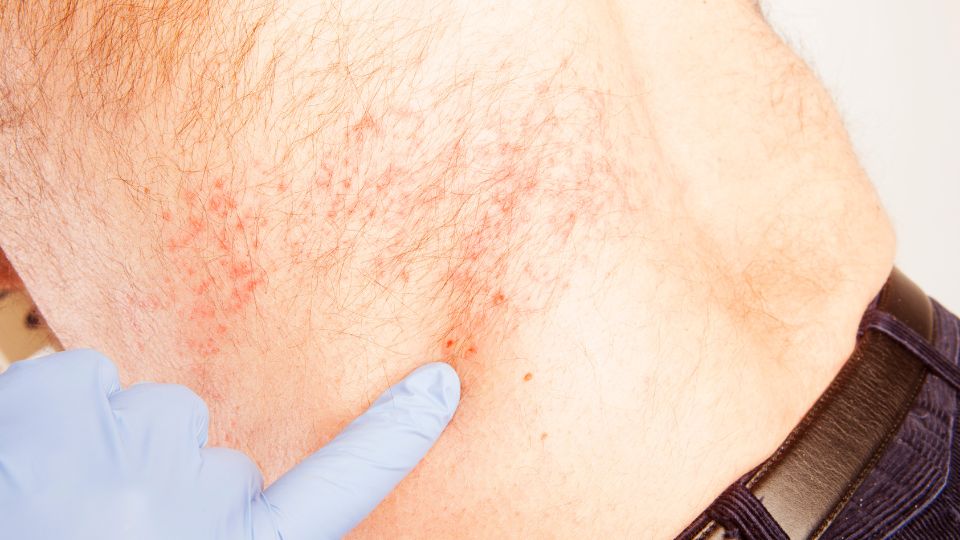
What does the shingles rash look like?
The rash typically starts as patches of irritated skin before developing into groups of fluid-filled blisters.
It usually appears on just one side of the body and does not cross the body’s midline. The blisters gradually dry, crust over and heal.
Not every painful rash is shingles. Other skin conditions can look similar, which is why a pharmacist’s assessment is important before treatment.
What treatment can Pharmacy First provide?
Our pharmacist will recommend treatment based on the severity of your symptoms, how long you have had the rash and any factors that increase your risk of complications.
- Antiviral tablets: Medicines such as aciclovir or valaciclovir may be supplied when clinically appropriate. These help reduce viral activity and may shorten the illness or reduce complications.
- Pain relief: Paracetamol or ibuprofen, when suitable, may help relieve discomfort. If pain is severe or persistent, further medical assessment may be needed.
- Skin care advice: The pharmacist can recommend ways to keep the affected area clean, dry and protected while the blisters heal.
- Further medical care: If shingles affects a high-risk area, symptoms are severe or you have particular underlying health conditions, the pharmacist may arrange or recommend further assessment.
Why is early antiviral treatment important?
Antiviral medicines generally work best when started within 72 hours of the rash appearing.
Under the NHS Pharmacy First pathway, treatment may be appropriate during this period for people who meet certain criteria, including those over 50, those with moderate or severe symptoms and some people with weakened immune systems.
Treatment may also be considered up to 7 days after rash onset in certain circumstances, including ongoing new blister formation, severe pain or increased risk of complications.
Prescription treatment is not automatic. The pharmacist will check clinical eligibility, medical history, medicine suitability and whether another healthcare service is more appropriate.
How to manage shingles symptoms at home
Shingles can be uncomfortable, particularly while blisters are forming. Alongside any recommended treatment, these measures may help relieve symptoms and support recovery.
- Keep the rash clean and dry. Gently wash the affected skin when necessary and avoid products that may cause further irritation.
- Wear loose clothing. Soft, breathable fabrics may help reduce rubbing and discomfort around sensitive skin.
- Use a cool compress. A clean, cool, damp cloth held gently against the rash may provide temporary relief. Avoid applying ice directly to the skin.
- Take suitable pain relief. Paracetamol may help with discomfort. Ask a pharmacist whether other medicines are appropriate for you.
- Avoid scratching or picking blisters. This can damage the skin and increase the risk of a secondary bacterial infection.
- Protect the affected area. If covering the rash is necessary, use loose clothing or a non-stick dressing rather than adhesive plasters that could irritate the blisters.
How long does shingles last?
The rash can take up to 4 weeks to heal. Pain and skin sensitivity may continue after the blisters have cleared, although these symptoms usually improve gradually.
Some people develop longer-lasting nerve pain, known as post-herpetic neuralgia. This is more common in older adults.
If pain continues after the rash has healed, or interferes with sleep and everyday activities, contact your GP for advice.
Can shingles spread to other people?
You cannot directly give someone shingles. However, the virus inside shingles blisters can cause chickenpox in someone who has never had chickenpox or received the chickenpox vaccine.
The virus can spread while the blisters contain fluid. Once all the blisters have dried and formed scabs, the risk of transmission from the rash has passed.
To reduce the risk of spreading the virus:
- Keep the rash covered where possible
- Avoid touching or scratching the blisters
- Wash your hands regularly, particularly after touching the affected area
- Avoid sharing towels that may have contacted the rash
- Avoid close contact with vulnerable people until the blisters have dried
Take extra care around pregnant people who have never had chickenpox, newborn babies and people with weakened immune systems.
You should stay away from work if your rash is weeping and cannot be covered, until the blisters have dried.
When should you contact a GP?
Although many cases of shingles can be assessed through Pharmacy First, some symptoms require further investigation or treatment.
Contact your GP if your pain remains difficult to manage, the rash is not healing as expected or discomfort continues after the blisters have cleared.
You should also arrange reassessment if symptoms do not improve after completing a prescribed 7-day antiviral course.
Possible complications of shingles
Most people recover without serious problems, but shingles can sometimes cause:
- Post-herpetic neuralgia: Nerve pain that continues after the rash has healed.
- Secondary skin infection: Increasing redness, swelling, warmth or pus around the blisters.
- Eye complications: Inflammation or damage affecting eyesight, particularly when shingles develops around the eye.
- Nerve problems: Rare complications affecting facial movement, hearing or muscle strength.
Do not wait for a routine GP appointment if you develop eye symptoms, facial weakness, rapidly worsening illness or other serious warning signs. Follow the urgent-care guidance above.
Can the shingles vaccine help?
Vaccination can reduce the risk of developing shingles and its complications.
The NHS offers shingles vaccination to eligible people based on their age and immune system health. Eligibility has been expanded to include adults aged 18 and over with severe immunosuppression.
Even if you have previously had shingles, vaccination may still be recommended.
Ask your GP practice about your eligibility once you have recovered from the current episode.
Shingles treatment FAQs
Find quick answers to common questions about shingles and the NHS Pharmacy First service.
Who can use Pharmacy First for shingles?
The NHS shingles clinical pathway is available for eligible adults aged 18 and over. You do not need a GP referral or to be registered with a GP. The pharmacist will check whether your symptoms and medical history meet the service criteria. Pregnant patients are excluded from this pathway and should seek urgent GP advice.
Can I get antiviral tablets without seeing a GP?
Yes. Under Pharmacy First, an authorised pharmacist can supply certain prescription antiviral medicines, including aciclovir or valaciclovir, when the NHS clinical criteria are met. Treatment depends on your symptoms, how long the rash has been present and your medical history.
Can I still get treatment if my rash started more than 3 days ago?
Possibly. Antiviral treatment is generally most effective within 72 hours, but it may still be appropriate up to 7 days after the rash appeared for some patients, including those with ongoing new blisters, severe pain or increased risk of complications. Seek advice promptly rather than assuming it is too late.
Can I get shingles more than once?
Yes. Although many people only experience shingles once, the virus can reactivate again later in life. Vaccination can reduce the risk of future episodes and complications. Ask your GP practice whether you are eligible for an NHS shingles vaccine.
Is the NHS Pharmacy First consultation free?
Yes. Eligible NHS Pharmacy First consultations are free. Normal NHS prescription charges apply to medicines supplied unless you qualify for an exemption. Over-the-counter products purchased separately are paid for. If pharmacy treatment is unsuitable, the pharmacist will explain the appropriate next steps.
Get help with shingles at Lemonpill
If you have developed a painful, blistering rash or think you may have shingles, Lemonpill is here to help.
Our pharmacist can assess your symptoms, advise on appropriate treatment and determine whether antiviral medication may be suitable.
Seek advice early. The sooner shingles is assessed, the better the opportunity to start antiviral treatment when indicated.
Book your Pharmacy First shingles consultation
For assistance or urgent appointment enquiries, contact Lemonpill, based in Islington, London.
This information is for general guidance and does not replace an individual clinical assessment. NHS Pharmacy First shingles treatment is available to eligible adults aged 18 and over. Treatment depends on symptoms, medical history, time since rash onset and NHS clinical criteria. Seek urgent medical advice for shingles affecting the face or eyes, severe illness or rapidly worsening symptoms.